
Email marketing continues to be one of the most reliable and high-ROI digital marketing channels, even as AI, automation, and privacy regulations reshape the online landscape. In 2026, it is no longer about mass emails-it’s about personalization, trust, relevance, and value-driven communication.
This guide explains how email marketing works today, why it still outperforms many channels, and how businesses can use its strategies to build relationships, increase conversions, and drive long-term growth.
What Is Email Marketing?
It is a digital marketing strategy that involves sending targeted emails to prospects and customers to promote products, share valuable content, nurture leads, and retain existing users.
In 2026, it has evolved into a data-driven, AI-powered communication channel focused on:
- Personalization
- Consent-based engagement
- Automation
- Customer experience
Unlike paid ads, it allows brands to own their audience rather than rent it.
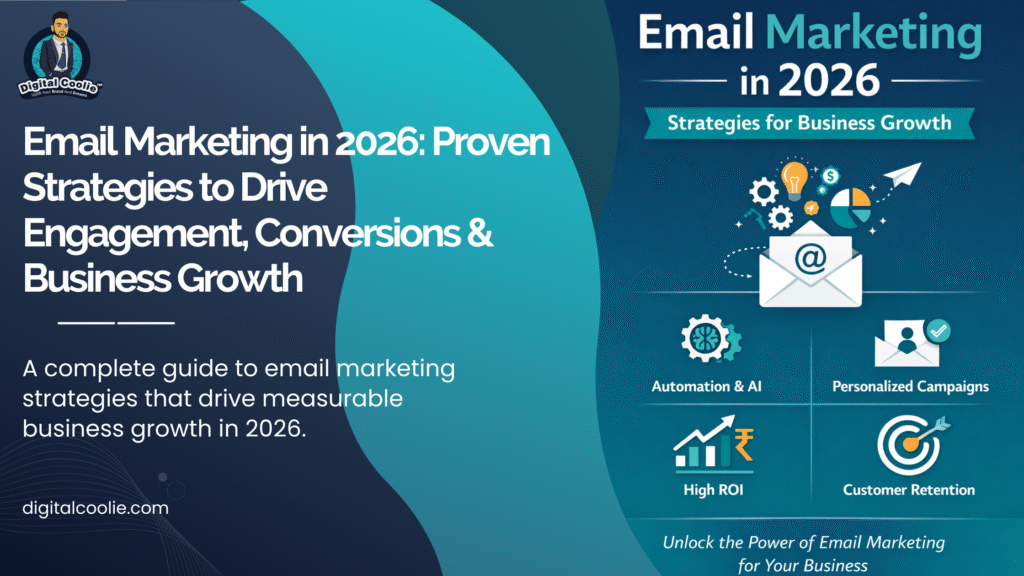
Why Email Marketing Is Still Powerful in 2026
1. High ROI Across Industries
It consistently delivers one of the highest returns on investment compared to other digital marketing channels.
2. Direct Access to Your Audience
Unlike social media algorithms, emails land directly in the user’s inbox, giving businesses control over communication.
3. Supports Customer Retention
It is a core pillar of customer retention marketing, helping brands stay connected post-purchase.
4. Works Across the Funnel
From awareness to conversion and loyalty, it supports every stage of the buyer journey.
AI In Email Marketing
AI plays a critical role in modern email marketing strategies:
✔ Smart Personalization
AI helps create personalized email campaigns based on user behavior, preferences, and intent.
✔ Predictive Send Times
Emails are delivered when users are most likely to open and engage.
✔ Automated Content Suggestions
Subject lines, CTAs, and email layouts are optimized using performance data.
✔ Improved Segmentation
AI enables micro-segmentation for hyper-relevant messaging.
Email Automation: The Backbone of Scalable Growth
Email automation allows businesses to send the right message at the right time without manual effort.
Popular Automated Email Types:
- Welcome email sequences
- Lead nurturing emails
- Abandoned cart emails
- Re-engagement campaigns
- Post-purchase follow-ups
Automation improves consistency while maintaining a human-centric approach.
Email Marketing for Businesses: Proven Strategies That Drive Growth
1. Build a Permission-Based Email List
Focus on quality over quantity. Use:
- Website forms
- Content downloads
- Newsletter signups
- Lead magnets
2. Segment Your Audience
Segment based on:
- Behavior
- Location
- Purchase history
- Engagement level
Segmentation improves relevance and boosts open rates.
3. Focus on Value-Driven Content
Emails should educate, inform, or solve problems-not just sell.
4. Optimize for Mobile Users
Most emails are opened on mobile. Responsive design is non-negotiable.
5. Improve Email Deliverability
Maintain clean lists, authenticate domains, and avoid spam triggers.
GEO-Targeted E-Marketing Strategies
Geo-targeting helps businesses deliver location-specific offers and content, improving relevance.
Examples:
- City-based promotions
- Local event announcements
- Region-specific product launches
This approach works especially well for local and service-based businesses.
Voice Search & AEO-Friendly Email Content
Email content should align with how users ask questions naturally, especially as voice search adoption grows.
Example Voice-Friendly Queries:
- “How does email marketing help small businesses?”
- “What is the best email marketing strategy in 2026?”
Using conversational language improves Answer Engine Optimization (AEO).
Email Marketing & Digital Marketing Integration
Email marketing works best when integrated with:
- Content marketing
- Social media marketing
- Performance marketing
- SEO-driven lead generation
This multi-channel approach ensures consistent messaging and stronger brand authority.
Measuring Performance
Key metrics to track:
- Open rate
- Click-through rate (CTR)
- Conversion rate
- Bounce rate
- Unsubscribe rate
Data-driven optimization is essential for sustainable growth.
EEAT & Trust in Email Marketing
Email marketing supports EEAT principles when done correctly:
- Experience: Share real insights, case studies, and expertise
- Expertise: Provide accurate, well-researched information
- Authoritativeness: Maintain consistent brand voice and credibility
- Trustworthiness: Respect privacy, consent, and transparency
Trust is the foundation of long-term email success.
FAQs
Q1. Is email marketing still effective in 2026?
Yes. It remains one of the most effective digital marketing channels due to personalization, automation, and direct audience access.
Q2. How often should businesses send marketing emails?
Consistency matters more than frequency. Most businesses perform well with 1-3 emails per week.
Q3. Can small businesses benefit from email marketing?
Absolutely. It is cost-effective and scalable, making it ideal for small and growing businesses.
Q4. What tools are used for email marketing automation?
Popular tools include marketing automation platforms that support segmentation, personalization, and analytics.
Final Thoughts
Email marketing in 2026 is smarter, more personalized, and more customer-centric than ever before. Businesses that focus on value, trust, and automation will continue to see strong engagement and conversions.
When combined with AI, data insights, and ethical marketing practices, it becomes a long-term growth engine rather than just a promotional tool.
Looking to implement a results-driven email marketing strategy?
A well-planned email marketing system can help you attract qualified leads, retain customers, and scale sustainably in today’s competitive digital landscape.