
In the ever-evolving world of digital marketing, monetization strategies are constantly changing. One such method that has gained attention—both positive and negative is in-text advertising.
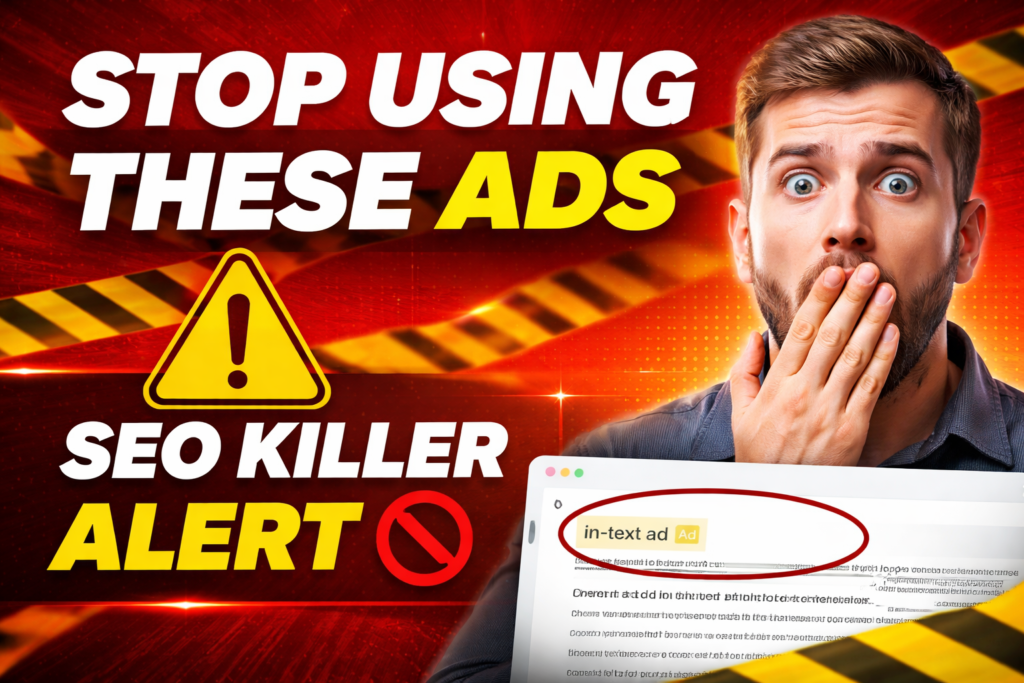
You may have noticed certain words in an article suddenly turning into clickable links with small “Ad” labels. Hover over them, and a popup appears. Click on them, and you’re redirected to a completely different website.
While this may seem like a clever way to generate additional revenue, the reality is quite different.
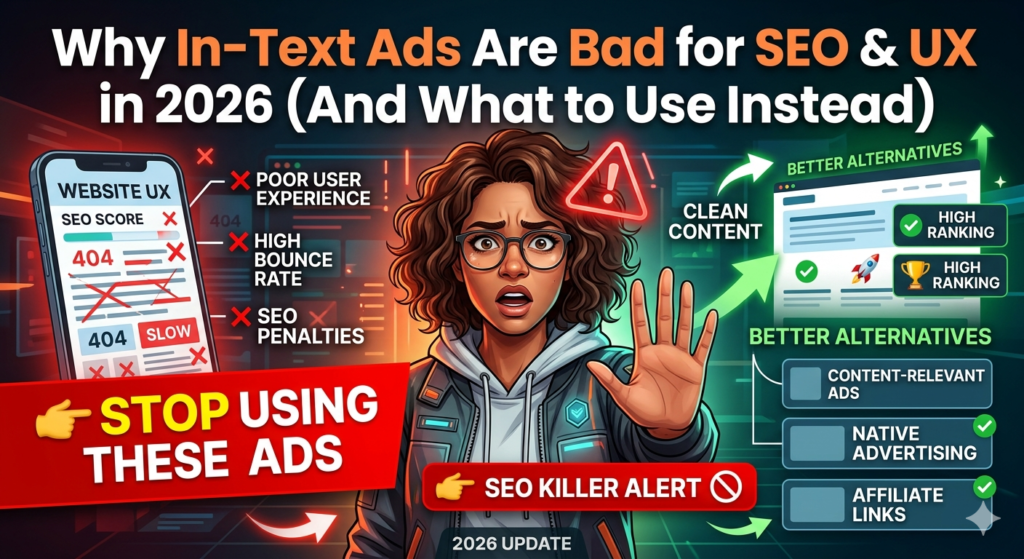
In this blog, we’ll explore why in-text ads can harm your website’s SEO, damage user experience, and even conflict with Google’s E-E-A-T guidelines and what you should do instead.
🔍 What Are In-Text Ads?
In-text ads are a form of contextual advertising where specific keywords within your content are automatically converted into clickable ad links.
These ads are typically powered by networks like Taboola or similar platforms that inject monetized links into your content.
📌 Example:
- A normal word like “marketing” becomes highlighted
- A small “Ad” label appears next to it
- Hovering shows a popup ad
- Clicking redirects users to external websites
While this sounds harmless, the actual impact on your website can be significant.
⚠️ Why In-Text Ads Hurt User Experience (UX)
User experience is one of the most important ranking factors today. Google prioritizes websites that are easy to read, navigate, and interact with.
❌ 1. Interrupts Reading Flow
Imagine reading an important blog and suddenly random words start glowing or underlining.
This:
- Breaks concentration
- Creates distraction
- Reduces content engagement
Users come for information not for unexpected interruptions.
❌ 2. Creates Annoying Popups
Hover-triggered ads can:
- Block content
- Distract users
- Lead to accidental clicks
On mobile devices, this problem becomes even worse since hover actions don’t exist resulting in misclicks.
❌ 3. Reduces Trust
When users click a link expecting useful content but land on a clickbait page, trust is instantly broken.
Over time, this leads to:
- Lower brand credibility
- Reduced repeat visitors
- Negative perception of your website
📉 Impact on SEO Rankings
Many website owners underestimate how much ads affect SEO. While Google doesn’t explicitly ban in-text ads, it strongly discourages disruptive ad formats.
🔻 1. Increased Bounce Rate
When users feel annoyed or misled, they leave quickly.
👉 Result:
- Higher bounce rate
- Lower dwell time
These are negative behavioral signals that can impact rankings.
🔻 2. Poor Engagement Metrics
Google tracks how users interact with your content.
With in-text ads:
- Users scroll less
- Spend less time
- Avoid clicking internal links
This weakens your SEO performance.
🔻 3. Irrelevant Outbound Links
In-text ads often link to unrelated external websites.
This creates:
- Poor topical relevance
- Loss of authority
- Confusing content signals
Search engines prefer websites that maintain contextual relevance.
🧠 E-E-A-T and Why It Matters
Google uses the E-E-A-T framework to evaluate content quality.
Let’s break this down:
✅ Experience
Does the content reflect real-world expertise?
✅ Expertise
Is the content created by knowledgeable sources?
✅ Authoritativeness
Is the website recognized as a reliable source?
✅ Trustworthiness
Can users trust the content and links?
🚨 Where In-Text Ads Fail
In-text ads negatively affect Trustworthiness because:
- They redirect users to low-quality pages
- They appear deceptive (hidden within content)
- They prioritize revenue over user value
This can signal to Google that your website is not user-first.
📱 Mobile Experience Issues
Mobile-first indexing means Google primarily evaluates your mobile site.
In-text ads perform poorly on mobile because:
- No hover functionality
- Higher accidental clicks
- Popups cover content
This leads to:
- Frustrated users
- Poor mobile usability
- Lower rankings
🔥 Real Example: High-Traffic Sites Using In-Text Ads
Even popular websites sometimes use in-text ads for extra revenue.
However, just because big sites use them doesn’t mean it’s the right strategy for you.
Why?
- Large platforms already have strong authority
- They can afford minor UX compromises
- Smaller websites cannot
If you’re building a brand or agency, trust matters more than quick ad revenue.
💡 Better Alternatives to In-Text Ads
If your goal is to monetize your website without hurting SEO, here are smarter options:
✅ 1. Native Ads (Clean Placement)
Instead of inserting ads inside words:
- Place ads between sections
- Clearly label them
- Maintain readability
This improves both UX and transparency.
✅ 2. Affiliate Marketing (High Intent)
Recommend relevant tools or services.
Example:
- SEO tools
- Marketing platforms
- Business software
This works because:
- It aligns with user intent
- Builds trust
- Generates better conversions
✅ 3. Lead Generation (Best for Agencies)
If you run a service-based business:
👉 Focus on:
- Free audits
- Consultation forms
- Downloadable resources
This approach:
- Generates qualified leads
- Builds authority
- Increases long-term revenue
✅ 4. Content Funnel Strategy
Instead of direct monetization:
➡️ Blog → Lead Magnet → Email → Conversion
This creates:
- Sustainable growth
- Strong audience relationship
- Higher lifetime value
🧩 When (If Ever) Should You Use In-Text Ads?
Honestly, in most cases:
👉 You should avoid them
However, they may work if:
- Your site is purely content-driven
- You prioritize short-term revenue
- UX is not your main concern
But for:
- Agencies
- Brands
- SEO-focused websites
👉 It’s a clear NO
🏁 Conclusion
In-text ads may look like an easy way to boost revenue, but they come with hidden costs.
They:
- Disrupt user experience
- Reduce trust
- Harm SEO performance
- Conflict with Google’s quality guidelines
In 2026, success in digital marketing is no longer about quick wins it’s about building trust, delivering value, and creating seamless user experiences.
📢 Final Takeaway
“Short-term monetization tactics can cost you long-term growth.”
If you truly want to scale your website:
- Focus on users first
- Optimize for trust
- Monetize smartly
🔥 CTA
Want to grow your website traffic and revenue without hurting SEO?
👉 Let Digital Coolie help you build a high-converting, SEO-friendly strategy.
📩 Contact us today for a free website audit!