
Introduction: What Is Performance Marketing?
Performance marketing has become one of the most powerful approaches in digital marketing, especially for businesses that want measurable, transparent, and ROI-focused results. Unlike traditional advertising, it ensures that brands pay only when a specific action occurs – such as a click, lead, or conversion.
As we move into 2026, performance marketing is no longer optional. With rising ad costs, increased competition, and smarter consumers, businesses must adopt data-driven marketing strategies to stay profitable and scalable.
This guide explains it in simple terms, how it works, its channels, benefits, risks, and best practices – helping businesses make informed decisions.
What Is Performance Marketing?
It is a results-based digital marketing model where advertisers pay only for specific outcomes. It is also known as paid marketing. These outcomes can include:
- Website clicks
- Lead submissions
- App installs
- Sales or purchases
- Engagement actions
Unlike awareness campaigns, it focuses on measurable performance metrics such as ROI, CPA (cost per acquisition), and conversion rate.
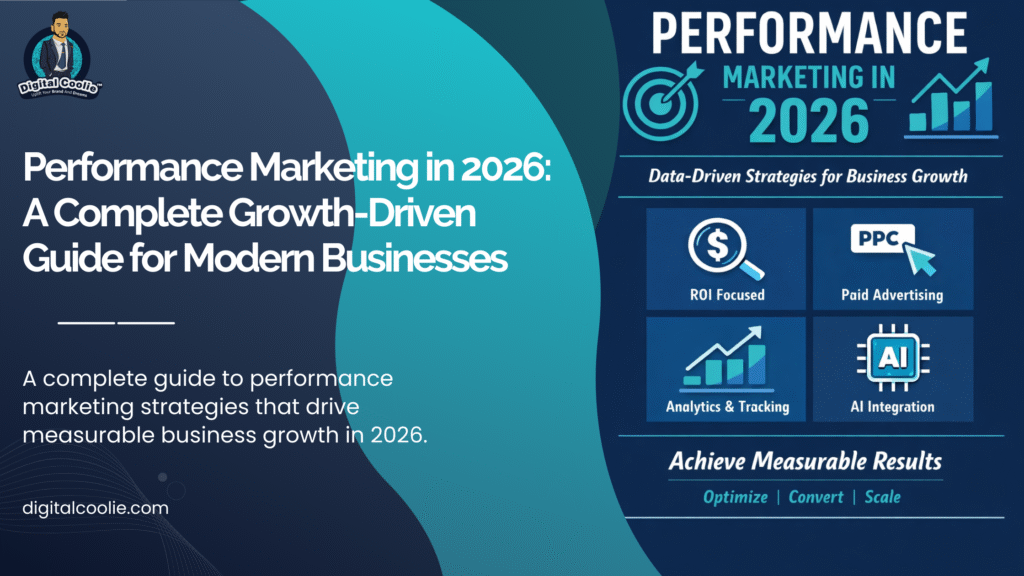
Why Performance Marketing Matters for Businesses in 2026
1. Budget Efficiency
Businesses only pay for results, reducing wasted ad spend.
2. Complete Transparency
Every campaign can be tracked, measured, and optimized in real time.
3. Scalable Growth
Winning campaigns can be scaled quickly based on performance data.
4. Better Decision-Making
Data insights allow businesses to refine targeting, messaging, and channels.
5. Competitive Advantage
Brands which uses it adapt faster than competitors relying on guesswork.
Core Performance Marketing Channels
Paid Search Advertising (PPC)
Pay-per-click advertising on search engines allows businesses to target high-intent users actively searching for products or services. PPC remains a core pillar of paid marketing due to its predictability and control.
Social Media Advertising
Platforms like Facebook, Instagram, LinkedIn, and YouTube offer advanced audience targeting. Social media advertising supports paid marketing by tracking engagement, leads, and conversions.
Affiliate Marketing
Affiliate partners promote products and earn commissions only when a conversion occurs. This low-risk model aligns perfectly with paid marketing principles.
Display & Native Advertising
These ads focus on remarketing and awareness-to-conversion journeys, supported by conversion tracking and optimization.
Search Engine Optimization (SEO)
While SEO is organic, it strongly supports paid marketing by improving conversion-focused traffic quality and lowering dependency on paid channels.
How Performance Marketing Works Step-by-Step
- Define campaign goals (leads, sales, installs)
- Select paid marketing channels
- Set tracking and analytics
- Launch campaigns with controlled budgets
- Monitor data and user behavior
- Optimize creatives, targeting, and bids
- Scale high-performing campaigns
This continuous optimization cycle is what makes it sustainable.
Role of AI in Paid Marketing
AI is transforming paid marketing by improving speed, accuracy, and personalization. AI helps marketers:
- Analyze large datasets quickly
- Predict user behavior
- Optimize ad bidding in real time
- Personalize messaging at scale
- Improve conversion tracking accuracy
However, AI tools must be guided by human expertise to align with EEAT guidelines and ethical marketing practices.
Performance Marketing vs Traditional Digital Marketing
| Aspect | Performance Marketing | Traditional Marketing |
|---|---|---|
| Payment | Based on results | Fixed cost |
| Tracking | Highly measurable | Limited |
| Optimization | Real-time | Slow |
| Risk | Low | High |
| ROI | Transparent | Estimated |
Common Metrics Used in Performance Marketing
- Cost Per Click (CPC)
- Cost Per Lead (CPL)
- Cost Per Acquisition (CPA)
- Conversion Rate
- Return on Ad Spend (ROAS)
- Customer Lifetime Value (CLV)
These metrics help businesses evaluate success accurately.
Benefits of Paid Marketing for Businesses
- Measurable growth
- Higher ROI
- Faster testing and learning
- Better audience targeting
- Improved funnel performance
Risks and Challenges to Watch Out For
- Over-optimization without strategy
- Poor tracking setup
- Low-quality leads
- Platform dependency
- Ignoring brand trust and experience
Balancing performance with long-term brand credibility is essential.
Best Practices for Paid Marketing Success
- Set clear goals before launching campaigns
- Use reliable analytics and tracking tools
- Focus on user experience and landing pages
- Test creatives and audiences continuously
- Combine paid channels with SEO and content
- Follow EEAT-aligned content and ad practices
How Performance Marketing Supports Long-Term Growth
When executed properly, performance marketing does more than generate quick wins. It builds data intelligence, improves customer understanding, and strengthens overall digital strategy.
Businesses that integrate it with content, SEO, and brand trust achieve sustainable results.
Frequently Asked Questions (FAQs)
What is performance marketing in simple terms?
It is a digital marketing approach where advertisers pay only when a specific result, such as a click or sale, is achieved.
Is performance marketing suitable for small businesses?
Yes. It allows small businesses to control budgets and focus only on measurable outcomes.
How is performance marketing different from PPC?
PPC is a channel, while performance marketing is a broader strategy that includes PPC, social ads, affiliates, and analytics.
Does performance marketing replace SEO?
No. SEO complements it by improving organic traffic quality and lowering long-term acquisition costs.
Is performance marketing future-proof?
Yes, when combined with data ethics, user experience, and EEAT-compliant strategies.
Final Thoughts
Performance marketing in 2026 is about accountability, intelligence, and trust. Businesses that rely on data-driven decision-making while respecting user experience and transparency will continue to grow – even in competitive markets.
If your goal is measurable growth with maximum ROI, paid marketing is the strategy you cannot afford to ignore.
Looking to implement performance marketing strategies that deliver real results?
Start with a data-driven approach that aligns performance, trust, and long-term growth.