
Introduction – AI Assistant Traffic Measurement in Google Analytics
Artificial Intelligence is rapidly changing how users discover websites. Instead of relying solely on traditional search engines, people are increasingly using AI-powered assistants like ChatGPT, Gemini, Claude, Perplexity, and Microsoft Copilot to find information, products, and services.
To help businesses understand this growing trend, Google is now rolling out AI Assistant Traffic Measurement in Google Analytics, a major update that automatically identifies and reports visits generated by AI assistants.
This new feature gives marketers unprecedented visibility into AI-generated traffic, helping them understand how AI platforms contribute to website visits, conversions, and customer acquisition.
In this guide, we’ll explore how Google’s new AI traffic reporting works, which AI platforms are included, and why AI referral traffic is becoming a critical metric for SEO and digital marketing in 2026.
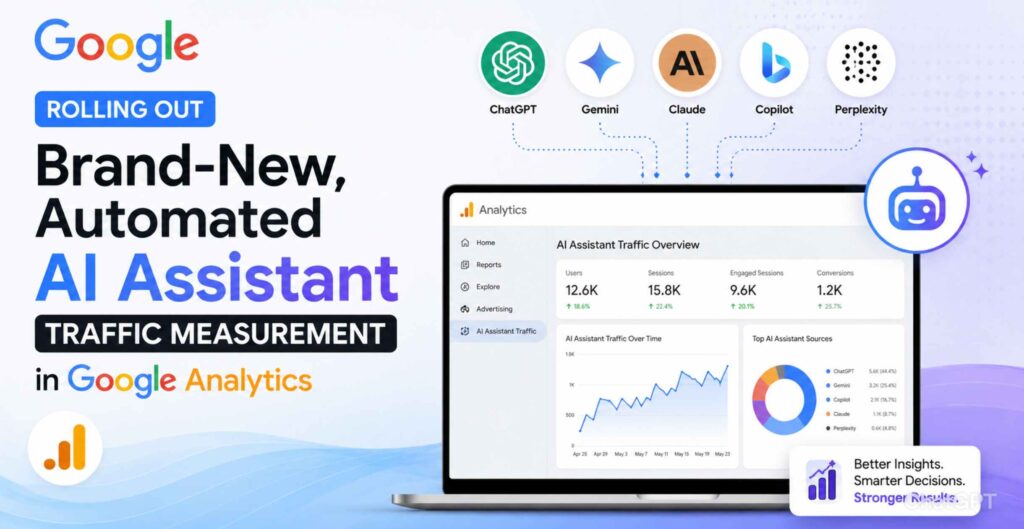
What Is AI Assistant Traffic Measurement in Google Analytics?
AI Assistant Traffic Measurement in Google Analytics is Google’s new automated reporting system designed to identify website visits coming from AI-powered assistants and generative AI platforms.
Previously, traffic from AI tools often appeared under:
- Referral Traffic
- Direct Traffic
- Unassigned Traffic
This made it difficult for marketers to determine how much traffic was actually being generated through AI interactions.
With the new update, Google Analytics automatically categorizes visits originating from AI platforms, making AI-generated traffic measurement significantly more accurate.
Key benefits include:
- Improved AI traffic visibility
- Better attribution reporting
- Enhanced audience insights
- More accurate marketing analysis
- Stronger ROI measurement
How Does Google Analytics Track AI Assistant Traffic?
One of the most common questions marketers are asking is:
How does Google Analytics track AI Assistant traffic?
Google Analytics identifies AI traffic using several attribution signals, including:
Referral Sources
When users click links inside AI assistants, referral information may be passed to websites.
Examples:
- ChatGPT referrals
- Gemini referrals
- Claude referrals
- Perplexity referrals
- Microsoft Copilot referrals
Source Classification
Google automatically groups recognized AI sources into dedicated reporting categories.
Machine Learning Attribution
Google Analytics uses advanced attribution modeling to better identify traffic patterns associated with AI-driven user acquisition.
UTM and Campaign Data
Businesses can further enhance tracking using custom campaign parameters.
The result is more accurate Google Analytics AI traffic reporting without requiring extensive manual configuration.
Google Analytics AI Traffic Reporting: Why This Update Matters
The rise of AI search experiences has transformed online discovery.
According to industry research, millions of users now start their journeys inside AI-powered tools instead of traditional search engines.
This means businesses need visibility into:
- Which AI platforms send visitors
- Which content attracts AI referrals
- How AI traffic converts
- How AI users behave compared to organic visitors
The new Google Analytics AI traffic reporting feature helps answer these questions.
Benefits include:
Better Attribution
Marketers can finally understand where AI-generated visits originate.
Improved SEO Analysis
Businesses can measure the impact of AI search visibility.
Enhanced Content Strategy
Content creators can identify pages most frequently surfaced by AI assistants.
Smarter Budget Allocation
Organizations can invest more confidently in GEO (Generative Engine Optimization).
Which AI Platforms Are Included in Google’s Traffic Reports?
Google is expected to recognize major AI assistants and generative search platforms.
These may include:
- ChatGPT
- Google Gemini
- Claude
- Perplexity
- Microsoft Copilot
As AI adoption continues to grow, Google will likely expand supported sources over time.
This allows marketers to gain deeper AI search traffic analytics across multiple AI ecosystems.
AI Assistant Traffic Tracking vs Traditional Search Tracking
Understanding the difference between AI traffic and organic search traffic is essential.
| Traditional Search | AI Assistant Traffic |
|---|---|
| User enters query in Google | User asks AI assistant |
| User sees SERP results | User receives AI-generated answer |
| Click occurs from search result | Click occurs from AI recommendation |
| Search Console measures visibility | AI Analytics measures AI referrals |
| Rankings drive traffic | AI citations drive traffic |
This distinction highlights why AI Assistant traffic tracking is becoming a new pillar of digital marketing measurement.
Measuring ChatGPT and AI Referral Traffic
A growing number of businesses want to understand:
Measuring ChatGPT and AI referral traffic
The new analytics update makes it easier to identify:
AI Referral Sources
See which AI assistant generated the visit.
Landing Pages
Understand which pages attract AI-generated traffic.
Engagement Metrics
Analyze:
- Time on site
- Engagement rate
- Pages per session
- Bounce rate
Conversion Tracking
Determine whether AI visitors:
- Submit forms
- Purchase products
- Download resources
- Request demos
This creates valuable generative AI traffic insights that were previously hidden.
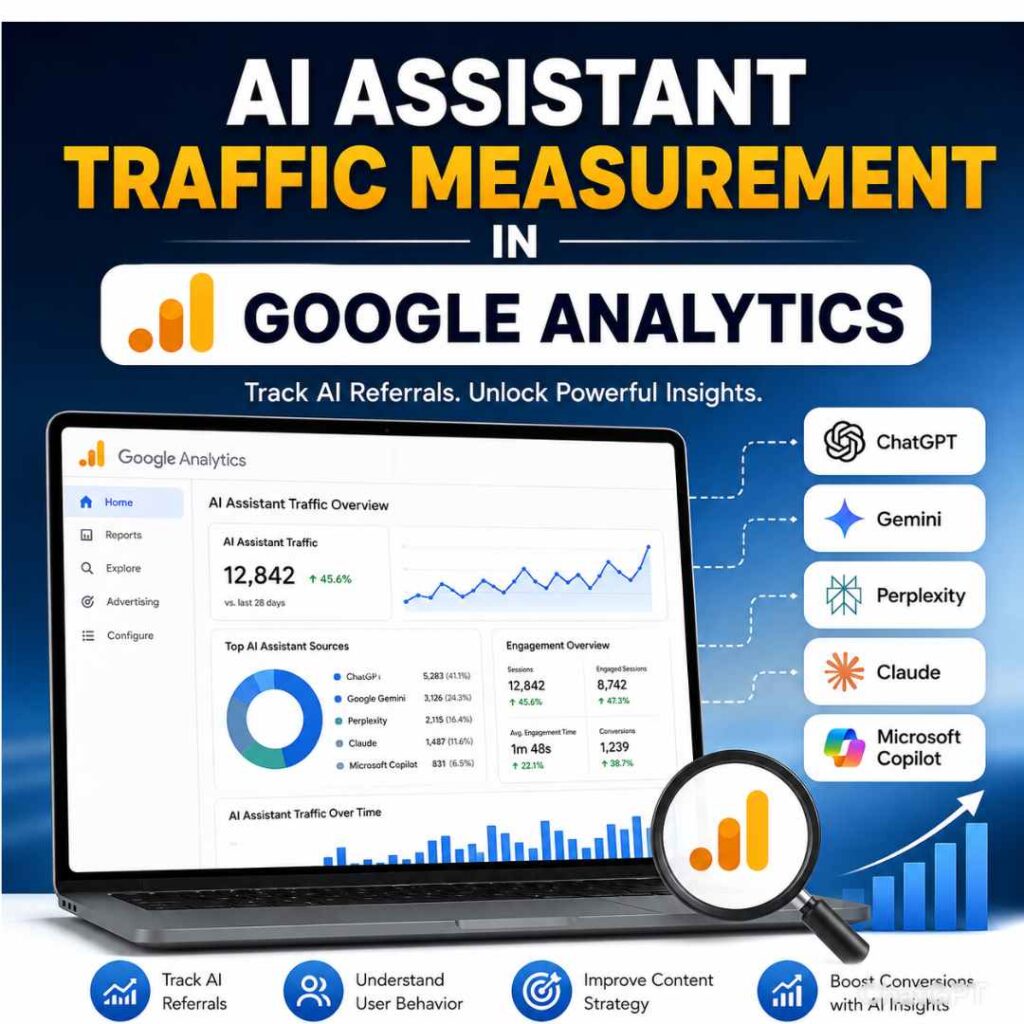
AI Traffic Sources in Google Analytics
Google Analytics now provides better visibility into emerging traffic channels.
Common AI traffic sources may include:
Conversational AI Platforms
- ChatGPT
- Gemini
- Claude
AI Search Engines
- Perplexity
- AI-powered search experiences
Productivity Assistants
- Copilot
- Enterprise AI assistants
Embedded AI Experiences
AI recommendations embedded within applications and services.
These insights help businesses understand the true impact of AI-driven user acquisition.
Why AI Traffic Tracking Is Important for Marketers
The internet is entering a new discovery era.
AI assistants increasingly act as intermediaries between users and websites.
Without AI tracking, businesses risk losing visibility into a growing acquisition channel.
Benefits include: – AI Assistant Traffic Measurement in Google Analytics
Improved Marketing Attribution
Understand which channels influence conversions.
Better Content Performance Analysis
Identify content frequently referenced by AI assistants.
Stronger GEO Strategy
Optimize content for AI citations and AI search visibility.
Future-Proof Reporting
Prepare for the continued rise of AI-generated discovery.
How Businesses Can Analyze AI-Generated Website Traffic
To maximize value from AI-generated traffic measurement, businesses should follow a structured approach.
Step 1: Monitor AI Referral Sources
Track which assistants send visitors.
Step 2: Analyze Landing Pages
Identify high-performing content.
Step 3: Compare Conversion Rates
Measure AI traffic against:
- Organic search
- Paid search
- Social media
- Email marketing
Step 4: Optimize Top Pages
Improve:
- Content depth
- Expertise signals
- Structured data
- Internal linking
Step 5: Create AI-Friendly Content
Develop content that:
- Answers questions directly
- Uses clear headings
- Includes expert insights
- Demonstrates EEAT
How AI Assistant Traffic Affects SEO Reporting
SEO reporting is evolving. – AI Assistant Traffic Measurement in Google Analytics
Historically, success was measured through:
- Rankings
- Clicks
- Impressions
- Organic traffic
Today, marketers must also consider:
- AI citations
- AI referrals
- AI-driven conversions
- Generative search visibility
The new Google Analytics attribution reporting capabilities help bridge this gap.
Businesses can now evaluate:
- AI visibility
- AI engagement
- AI-assisted conversions
alongside traditional SEO metrics.
Best Practices for Optimizing Content for AI Traffic
If you want more AI-generated visitors, consider these strategies.
Create Comprehensive Content
AI systems favor detailed resources.
Use Clear Question-and-Answer Formats
Answer Engine Optimization remains crucial.
Strengthen EEAT Signals
Demonstrate:
- Experience
- Expertise
- Authoritativeness
- Trustworthiness
Implement Structured Data
Help AI systems understand your content.
Publish Original Insights
Unique perspectives increase citation potential.
The Future of Automated AI Traffic Reporting
Google’s latest update signals a major shift in analytics.
As AI assistants become mainstream discovery tools, businesses will need dedicated reporting to understand user journeys.
Future enhancements may include: – AI Assistant Traffic Measurement in Google Analytics
- AI citation tracking
- AI answer visibility reporting
- AI conversion attribution
- Generative search performance metrics
- Cross-platform AI analytics
The launch of Automated AI Traffic Reporting represents an important step toward this future.
FAQs – AI Assistant Traffic Measurement in Google Analytics
What is AI Assistant traffic measurement in Google Analytics?
AI Assistant Traffic Measurement in Google Analytics is a reporting feature that identifies and categorizes website visits originating from AI assistants such as ChatGPT, Gemini, Claude, Perplexity, and Copilot.
How does Google Analytics identify AI Assistant traffic?
Google Analytics uses referral data, attribution modeling, source classification, and machine learning techniques to recognize AI-generated traffic sources.
Which AI platforms are included in Google’s traffic reports?
Major platforms may include ChatGPT, Gemini, Claude, Perplexity, and Microsoft Copilot, with additional AI sources expected in future updates.
Why is AI traffic tracking important for marketers?
AI traffic tracking helps marketers understand AI-driven user acquisition, improve attribution reporting, measure conversions, and optimize content for AI discovery.
How can businesses analyze AI-generated website traffic?
Businesses can review AI referral sources, landing pages, engagement metrics, conversion data, and user behavior reports within Google Analytics.
What is the difference between AI traffic and organic search traffic?
Organic search traffic comes from traditional search engine result pages, while AI traffic originates from AI-generated recommendations and conversational assistant interactions.
How does AI Assistant traffic affect SEO reporting?
AI Assistant traffic introduces a new acquisition channel, requiring marketers to track AI referrals, AI citations, engagement, and conversions alongside traditional SEO metrics.
Conclusion – AI Assistant Traffic Measurement in Google Analytics
Google’s rollout of AI Assistant Traffic Measurement in Google Analytics marks one of the most significant analytics updates of 2026. As AI assistants become a primary discovery channel, marketers can no longer rely solely on traditional search metrics to evaluate performance.
With enhanced Google Analytics AI traffic reporting, improved AI Assistant traffic tracking, deeper AI-generated traffic measurement, and more accurate Google Analytics attribution reporting, businesses now have the tools needed to understand how AI influences website traffic and conversions.
Organizations that embrace AI search analytics today will be better positioned to thrive in the next generation of digital marketing, where AI assistants increasingly shape how users discover content, products, and brands.
GA now automatically flags and isolates referral traffic from the world’s top AI platforms (like Google Gemini, ChatGPT, Claude, and Perplexity) right inside your default reports.
No manual tagging, no guesswork.